Chimamanda Adichie: Beauty does not solve any problem from Louisiana Channel on Vimeo.
Melancholy is beautiful indeed, maybe that is why i love it when its raining.
Chimamanda Adichie: Beauty does not solve any problem from Louisiana Channel on Vimeo.
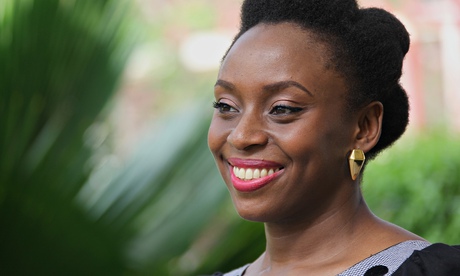
Emma Brockes (theGuardian)
Chimamanda Ngozi Adichie's third novel, Americanah is the story of two Nigerian émigrés who love and lose each other across continents and years. It is a book about leaving, and loneliness and the intersection between class and race, all of which makes it sound rather hard work – unjustly so. It is a book about hair: straight versus afro; and discreet tensions, not just between white Americans and Nigerian immigrants, but between Africans and African Americans, between the light- and dark-skinned, between new and established immigrants, and its frankness – in particular on the subject of gender – has upset some people. "I knew that was coming," says Adichie. "I can't write a book like that and then go, 'Oh my God, they're upset.' But my intention wasn't to upset." She smiles. “It's just that I'm willing to if that's what it takes to write the book."
…
The most misread character in the novel is Kimberley, a woman Ifemelu babysits for and who some readers have erroneously called racist. Adichie says she wrote Kimberley with someone she knew in mind and intended the mockery to be affectionate. (For example: Kimberley is always pointing out plain black women in magazines and going on about how beautiful they are, in a hapless effort to show Ifemelu she isn’t racist.)
…
There is one stand-out racist incident in the novel, says Adichie, when a carpet-cleaner comes to the large house of the couple she babysits for and mistakes Ifemelu for the lady of the house. This happened to Adichie when she was babysitting in the wealthy suburbs outside Philadelphia.
"I remember opening the door and his face was such a cliche; he looked at me and his whole face fell. You know: I can't believe I'm working for a black person. And he had such an attitude. And then when I said, ‘Mrs So and So said you were coming', he changed and suddenly was my friend."
…
… If you’re enmeshed in mediocrity, you just don’t know how mediocre it all is.
…
BlackInAsia:
… quote from Chimamanda Adichie which encapsulates these ideas so well, as it’s so important that we all understand what colonization “looks” like and the tremendous damages and losses which are incurred under any and all colonial regimes:
"[He] was dangerously wrong to quantify the effects of colonialism and to reduce it to land. This does not diminish the enormous practical and emotional significance of the loss of ancestral lands. But the truth is that the losses associated with any unjust government— and colonialism was an unjust dictatorship—cannot be limited to those things that we can measure. The losses are more nuanced: the loss of language and stories, the loss of a way of being and a way thinking, the loss of dignity, and the loss that comes when succeeding generations inherit those losses."
Chimamanda Ngozi Adichie, Commonwealth Lecture 2012
Those more nuanced losses are arguably the most damaging and lasting legacy of colonization, and those were the same scars which my dream self found on my former student hidden right beneath the surface.
And that is what colonization looks like.

