Showing posts with label Plutocrats. Show all posts
Showing posts with label Plutocrats. Show all posts
Tuesday, February 18, 2014
1% Jokes and Plutocrats In Drag: What I Saw When I Crashed a Wall Street Secret Society
I suspect it is the same thing in Portugal, read Krugman’s Faking It (2014 - FEB 13).
The rightWing minions and the populace with illusion of superiority do big mouth the lies, targeting Gypsies and the Chinese community, with what the majority of the Portuguese small business owners have been doing for decades.
1% Jokes and Plutocrats In Drag: What I Saw When I Crashed a Wall Street Secret Society by Kevin Roose NYMag

Friday, May 17, 2013
The Plutocrats And Their Economists ( aka Mercenaries Dressed As Economists )
Paul Krugman’s The Smith/Klein/Kalecki Theory of Austerity:
Noah Smith recently offered an interesting take on the real reasons austerity garners so much support from elites, no matter hw badly it fails in practice.
Elites, he argues, see economic distress as an opportunity to push through “reforms” — which basically means changes they want, which may or may not actually serve the interest of promoting economic growth — and oppose any policies that might mitigate crisis without the need for these changes:
I conjecture that “austerians” are concerned that anti-recessionary macro policy will allow a country to “muddle through” a crisis without improving its institutions. In other words, they fear that a successful stimulus would be wasting a good crisis.
…
If people really do think that the danger of stimulus is not that it might fail, but that it might succeed, they need to say so. Only then, I believe, can we have an optimal public discussion about costs and benefits.
…
And the lineage goes back even further. Two and a half years ago Mike Konczal reminded us of a classic 1943 (!) essay by Michal Kalecki, who suggested that business interests hate Keynesian economics because they fear that it might work — and in so doing mean that politicians would no longer have to abase themselves before businessmen in the name of preserving confidence.
…
Wednesday, May 15, 2013
How the Case for Austerity Has Crumbled || Paul Krugman
Paul Krugman for The New York Review Of books
…
Why did austerity economics get such a powerful grip on elite opinion in the first place?
Everyone loves a morality play. “For the wages of sin is death” is a much more satisfying message than “Shit happens.” We all want events to have meaning.
…
And so we shouldn’t find it surprising that many popular interpretations of our current troubles return, whether the authors know it or not, to the instinctive, pre-Keynesian style of dwelling on the excesses of the boom rather than on the failures of the slump.
…
Monday, October 1, 2012
Why Do Billionaires Feel Victimized by Obama? || NewYorker
Super-Rich Irony: by Chrystia Freeland
…
In the letter, Cooperman argued that Obama has needlessly antagonized the rich by making comments that are hostile to economic success. The prose, rife with compound metaphors and righteous indignation, is a good reflection of Cooperman’s table talk. “The divisive, polarizing tone of your rhetoric is cleaving a widening gulf, at this point as much visceral as philosophical, between the downtrodden and those best positioned to help them,” Cooperman wrote. “It is a gulf that is at once counterproductive and freighted with dangerous historical precedents.”
…
Art by DANIEL ADEL
…
The growing antagonism of the super-wealthy toward Obama can seem mystifying, since Obama has served the rich quite well. His Administration supported the seven-hundred-billion-dollar tarp rescue package for Wall Street, and resisted calls from the Nobel Prize winners Joseph Stiglitz and Paul Krugman, and others on the left, to nationalize the big banks in exchange for that largesse. At the end of September, the S. & P. 500, the benchmark U.S. stock index, had rebounded to just 6.9 per cent below its all-time pre-crisis high, on October 9, 2007. The economists Emmanuel Saez and Thomas Piketty have found that ninety-three per cent of the gains during the 2009-10 recovery went to the top one per cent of earners. Those seated around the table at dinner with Al Gore had done even better: the top 0.01 per cent captured thirty-seven per cent of the total recovery pie, with a rebound in their incomes of more than twenty per cent, which amounted to an additional $4.2 million each.
…
This is the group that has benefitted most from the winner-take-all economy: the 0.1 per cent, whose share of the national income was 7.8 per cent in 2009, according to I.R.S. data. Moreover, even as the shifting tides of the global economy have rewarded the richest while squeezing the middle class, the U.S. tax system has favored the very top, as the tax returns of the Republican Presidential candidate, Mitt Romney, have illustrated. In 2011, Romney paid an effective tax rate of just 14.1 per cent, and his income of $13.7 million places him in the 0.01-per-cent group.
When Obama first ran for President, four years ago, Wall Street formed an important and lucrative part of his base: he raised about sixteen million dollars from the financial sector, compared with McCain, who raised about nine million. Employees of Goldman Sachs contributed more to Obama’s campaign than workers at any other firm, on Wall Street or beyond. Like many others in the financial-services industry, Leon Cooperman was impressed when he first saw Obama in action, at a Goldman Sachs event at the Museum of Modern Art, in New York, in May, 2007. Goldman had assembled a group of hedge-fund managers to meet the junior senator from Illinois who had the temerity to challenge Hillary Clinton for the Democratic nomination. Cooperman said he was impressed by Obama’s reply to a question about what he would do to taxes on the rich if he were elected. “ ‘Raise ’em.’ Just like that. ‘Raise ’em,’ ” Cooperman recalled Obama saying.
Although he voted for McCain in 2008, Cooperman was not compelled to enter the political debate until June, 2011, when he saw the President appear on TV during the debt-ceiling battle. Obama urged America’s “millionaires and billionaires” to pay their fair share, pointing out that they were doing well at a time when both the American middle class and the American federal treasury were under pressure. “If you are a wealthy C.E.O. or hedge-fund manager in America right now, your taxes are lower than they have ever been. They are lower than they have been since the nineteen-fifties,” the President said. “You can still ride on your corporate jet. You’re just going to have to pay a little more.”
Cooperman regarded the comments as a declaration of class warfare, and began to criticize Obama publicly
…
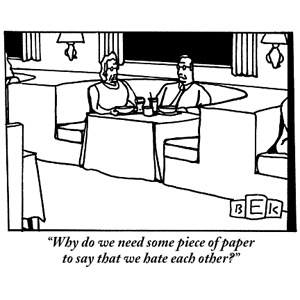
But WHY read it here, go to The NYorkerDOTcom
Wednesday, September 19, 2012
Wednesday, June 13, 2012
Subscribe to:
Posts (Atom)
About Me

- Deocliciano Okssipin Vieira, aka Ochyming
- Lisboa, Portugal
- Learning to better myself.